
Tall tube carton where both ends tuck and lock without glue. Used for medicine, cosmetics and retail products. Based on ECMA A20.20.03.01.
If you have ever held a medicine box, a lipstick carton, or a candle box where both ends just tuck closed with no glue — this is that box. The A20.20.03.01 is a tall rectangular tube that locks shut on both the top and bottom using the same tuck flap mechanism on each end.
The way it works is straightforward. The base tucks in and locks itself closed before you load the product. Once packed, the top tucks shut the same way — no glue, no tape required to close it. For extra strength on heavier items, a strip of tape on the base is all it takes.
What makes this different from other tube-style boxes on this site is that both ends are structurally identical. The Self Locking Mailer Box (ECMA A10.20.03.01) locks differently — it uses a self-locking mechanism rather than a tuck. The Tuck End Box (ECMA A11.10.03.03) is a closer cousin but has a different end geometry. The A20.20.03.01 is built specifically for taller, longer products where you want both ends to behave exactly the same way.
The tall tube format is designed around products that are longer or taller than they are wide. If the product stands upright on a shelf or ships in a vertical orientation, this box is built for it.
Common uses include:
Medicines and supplements — tablet bottles, syringes, dropper bottles, vitamin tubes
Cosmetics and skincare — lipstick, mascara, serums, roll-ons, face creams in tall jars
Candles — pillar candles, tall jar candles, taper candle sets
Vinyl rolls and posters — the tall narrow format holds rolls snugly without them shifting
Stationery and craft supplies — marker sets, paint tubes, brush sets
Food products — long biscuit boxes, pasta packaging, seasoning tubes
If your product is wide and flat rather than tall, this is not the right format. The Flat Pack Box (FEFCO 0401) handles flat items better. If you need heavy duty shipping without any tuck mechanism, the Heavy Duty Box (FEFCO 0201) is the stronger choice.
This box has a glue flap on the side that holds the tube structure together before the ends are tucked. It is the vertical seam that runs the full height of the box.
The most common mistake people make is sizing the glue flap smaller than the width of their double-sided tape. The tape overhangs the flap, sticks to the wrong surface, and the seam either does not bond properly or looks messy.
The rule is simple — make your glue flap at least as wide as your tape.
For tall boxes packing long items like vinyl rolls or poster tubes, go further: set the glue flap width equal to the full side width of the box. At that size you can skip double-sided tape entirely and seal the seam with regular clear tape on the outside. No alignment needed, no tape edge hanging off. It is quicker on a packing line and just as strong.
This is the same approach that works well with the Tube Lock Box for cylindrical products — when the sealing surface is generous, simple clear tape does the job cleanly.
Most packaging formats are better at one or the other. A mailer box is great for shipping but looks utilitarian on a retail shelf. A tuck end carton looks polished in retail but is not ideal for posting.
This box sits comfortably in both settings. The clean tuck closure on both ends gives it a neat, finished appearance that works on a pharmacy shelf, a cosmetics display, or a gift shop counter. The same structure is also secure enough for standard shipping when the base is taped — the tuck flap locks the bottom before loading and does not pop open in transit under normal conditions.
If you are building a product that needs to go through retail distribution and also ship directly to customers, this format means you do not need two different box designs. One dieline, one template, one cutter setup.
For products that need even stronger shipping protection — fragile glass, very heavy items — pair this box as the inner carton with a Heavy Duty Full Overlap Box (FEFCO 0203) as the outer shipper.
Open display needed — if your product needs to be visible from the top or the sides, a fully enclosed tube is the wrong call
Very heavy items without tape — the tuck base holds well for standard weights but always tape the base for anything genuinely heavy
Wide flat products — the tall tube proportions are wrong for anything wider than it is tall. Try the Folding Box (FEFCO 0427) or the Self Locking Box (FEFCO 0429) for those
Items needing a separate lid — if you want the lid to be removable and reusable, the Lid Box with Base (FEFCO 0300) is the better fit
Download the dieline in three production-ready formats — all free, no account required:
PDF — print on A4 or A3 for prototyping, hand cutting, or desktop cutters
SVG — vector format for Cricut, Silhouette, Glowforge, and laser cutters
DXF — CAD format for AutoCAD, CorelDRAW, Illustrator, Zünd, Kongsberg, and CNC plotters
Cut and Crease layers are pre-separated. Send the file directly to your plotter or cutter without any additional cleanup.
No glue means one fewer consumable in your production or packing process. The box folds flat before assembly and ships flat in bulk, cutting storage and freight costs. It is compatible with:
Kraft paperboard
White-lined chipboard
FSC-certified cardstock
Single wall corrugated (for heavier variants)
For brands actively reducing adhesives and plastic from their supply chain, tuck-lock packaging is one of the most straightforward changes to make — especially at retail scale where thousands of boxes are assembled daily.
Enter your box dimensions — length, width, and height — in mm or inches
Set material thickness so crease and joint allowances calculate correctly
Set your glue flap width — at minimum match your tape width, or go full side width for large boxes
Preview the dieline in your browser before downloading
Download in PDF, SVG, or DXF
Cut, fold the tube, tuck and lock both ends — no glue needed to assemble
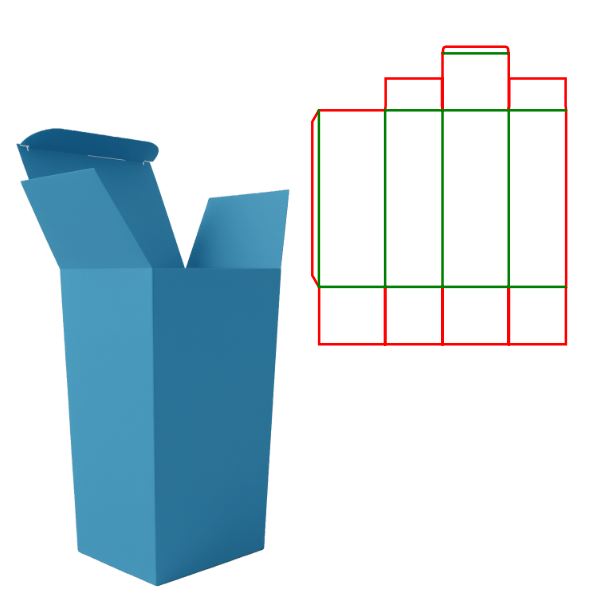
Quick-assembly self-locking mailer box template (ECMA A10.20.03.01). Ideal for e-commerce packaging.
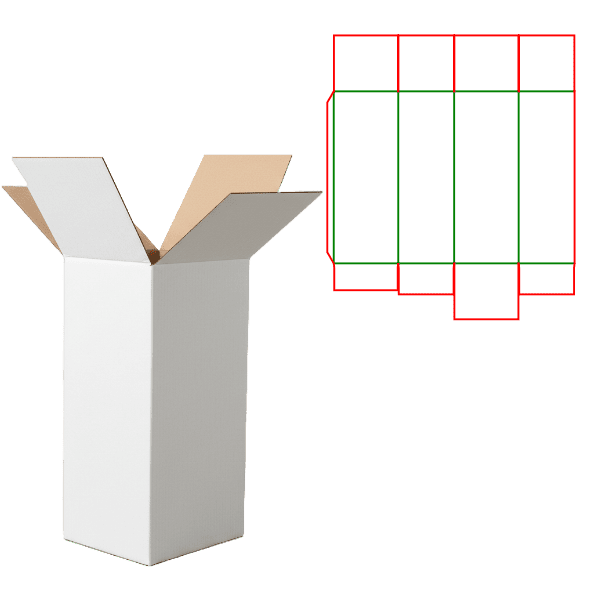
Tuck end folding carton dieline based on ECMA A11.10.03.03. Ideal for retail packaging.
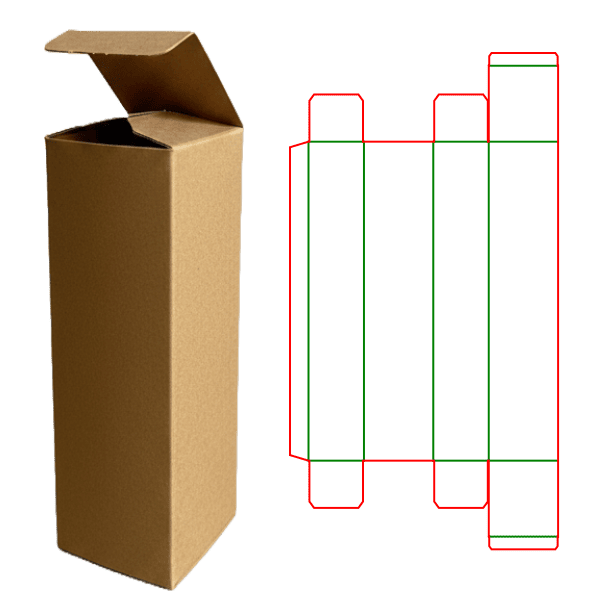
Best for packing bottles, vinyls, rolls, stickers and so on. This box can be used on multiple cases.
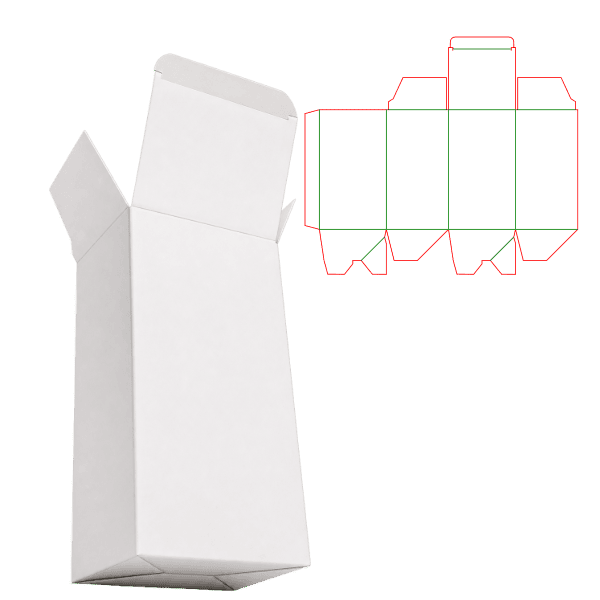
The fast one — a pre-glued base that snaps open and locks flat, so packing takes seconds not minutes.