
The open one — no lid, a strong sealed base, product on show and easy to reach.
The open-top display box is exactly that — four walls, a strong sealed base, and no top at all, so the product sits on show and stays easy to reach. The bottom is a full-overlap closure (all four flaps lapping over each other, doubled on board and sealed with tape or glue), and here it's doing structural work a lid normally shares: with no top tying the walls together, the base and the glued corner seam carry all the rigidity, so a well-made overlap bottom is what stops a filled box from splaying open. That makes it the go-to for anything meant to be seen and grabbed — retail dump and display bins, countertop impulse displays, shelf organisers and back-stock trays, gift-hamper and subscription-box bases, and open storage around a workshop or office. Two practical things follow from having no lid. First, height matters more than usual: the taller the walls relative to your board thickness, the more they bow outward when the box is full, so for a deep bin step up your caliper or the sides flare — a shallow tray-height box stays rigid on lighter board. Second, the top edge is the first thing a customer sees and touches, so treat it as a finished face — print or colour it if it's on display, and remember a raw cut edge exposes the board's inner liner. If you later need to close it, the same strong base comes with an integral tuck top on the overlap-bottom tuck box, or pair this open base with a separate lid using the lid box with base for a two-piece look. Set your length, width, and height — height especially, since it drives the whole feel from shallow tray to deep bin — and PackMyMan lays the overlap base and open walls out cleanly for your board, exporting a production-ready dieline in SVG, DXF, or PDF.
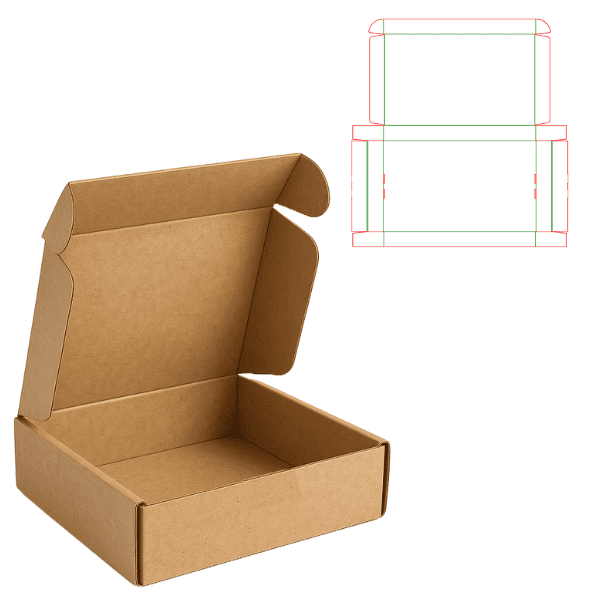
Glue-free folding box dieline based on FEFCO 0427. Download SVG, PDF or DXF. Generate high precision parametric dieline.
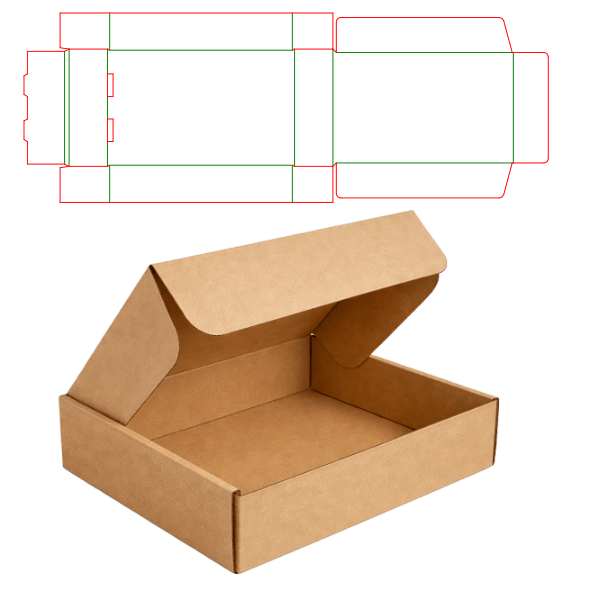
Pizza box style design with just locks on one side and do not require glue for locking. Based on FEFCO 0429 box standard
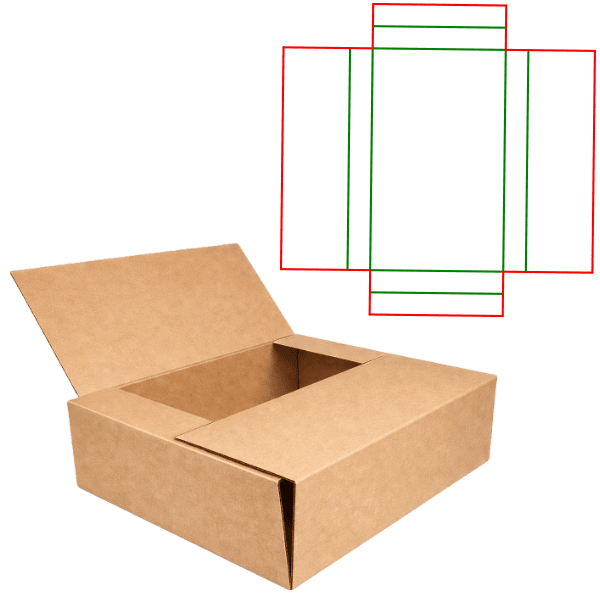
Best for packaging flat items that you want tight and good fit.
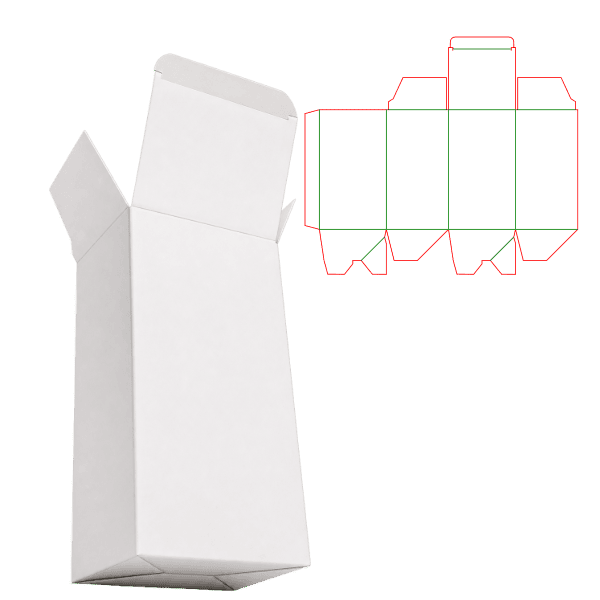
The fast one — a pre-glued base that snaps open and locks flat, so packing takes seconds not minutes.