
The middle ground — a strong overlap base you fold and seal yourself, with a quick tuck-top.
The overlap-bottom tuck box is the sensible middle option when a plain tuck end feels too flimsy but a machine-glued auto bottom is more than you need. Its base is a full four-flap overlap — every flap laps over the next so the bottom doubles up on board and carries real weight — while the top stays a simple tuck flap you fold in by hand. The trade-off is the honest bit worth knowing: unlike an auto bottom that arrives pre-glued and snaps flat on its own, this overlap base is sealed by you, with a strip of tape or a run of glue as you pack, so it's cheaper to produce and needs no folder-gluer, but it adds a second or two per box on the line. That makes it a smart pick for shorter runs, heavier or bulkier products, and small operations without gluing equipment — think hardware, jars and bottles, subscription goods, and anything a tuck-both-ends carton would sag under. If you're packing hundreds a day and want the base to lock itself with no tape at all, step up to the tuck top auto bottom box instead; if your runs are smaller and you don't mind sealing as you go, this is the more economical carton. One thing to set right when you generate it: the overlap flaps depend on your material thickness to lap correctly, so enter your caliper accurately — too thin and the flaps gap, too thick and they fight each other at the fold. Set your length, width, and height, and PackMyMan lays the overlap base and tuck top out cleanly for your board, then exports a production-ready dieline in SVG, DXF, or PDF.
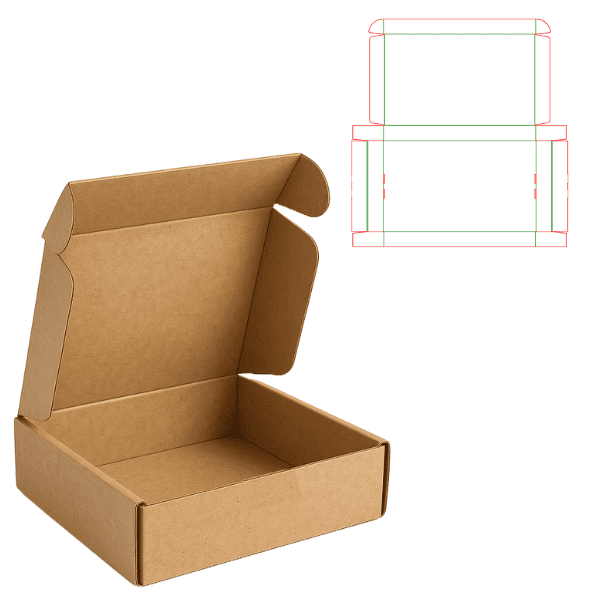
Glue-free folding box dieline based on FEFCO 0427. Download SVG, PDF or DXF. Generate high precision parametric dieline.
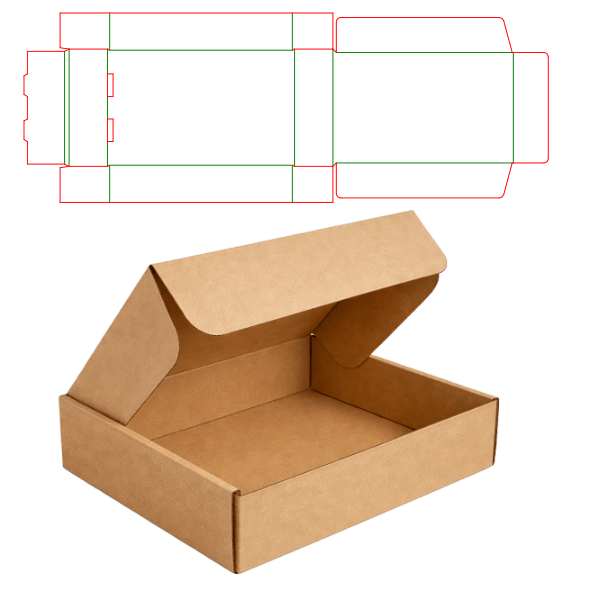
Pizza box style design with just locks on one side and do not require glue for locking. Based on FEFCO 0429 box standard
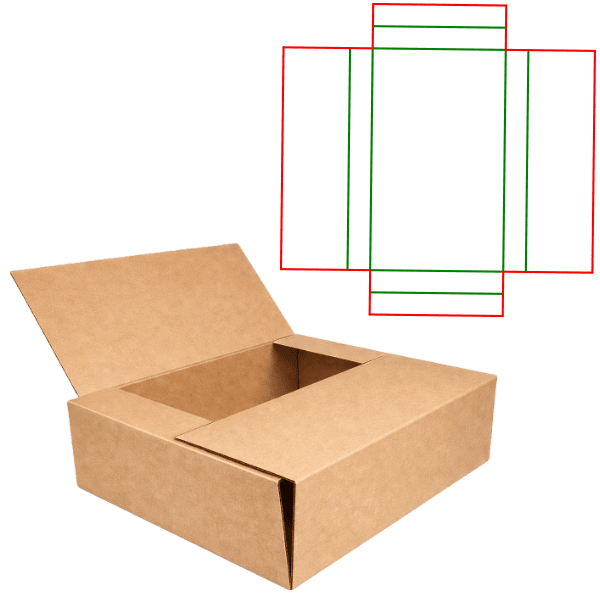
Best for packaging flat items that you want tight and good fit.
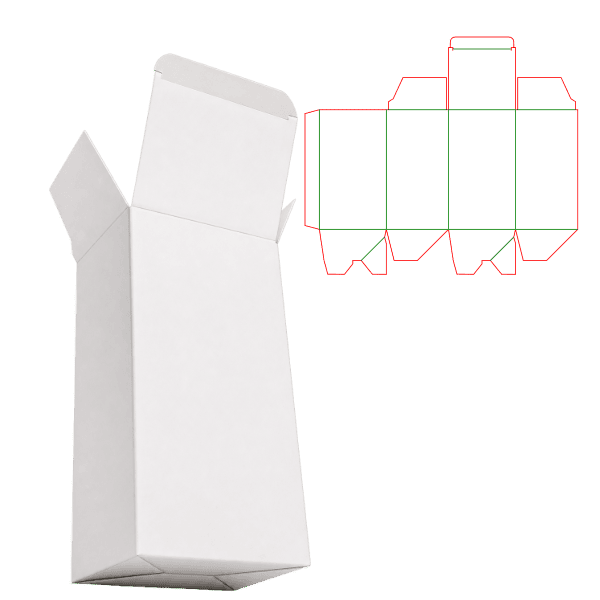
The fast one — a pre-glued base that snaps open and locks flat, so packing takes seconds not minutes.