
Classic gable box with a built-in carry handle. Side panel joined with glue, everything else tucks and locks. Popular for food takeaway, gift packaging, and retail party favours. Based on FEFCO 0217 standard.
Classic pointed gable top box with a built-in carry handle. Side panel joined with glue, everything else tucks and locks. Popular for food takeaway, gift packaging, and retail party favours. Based on FEFCO 0217 standard.
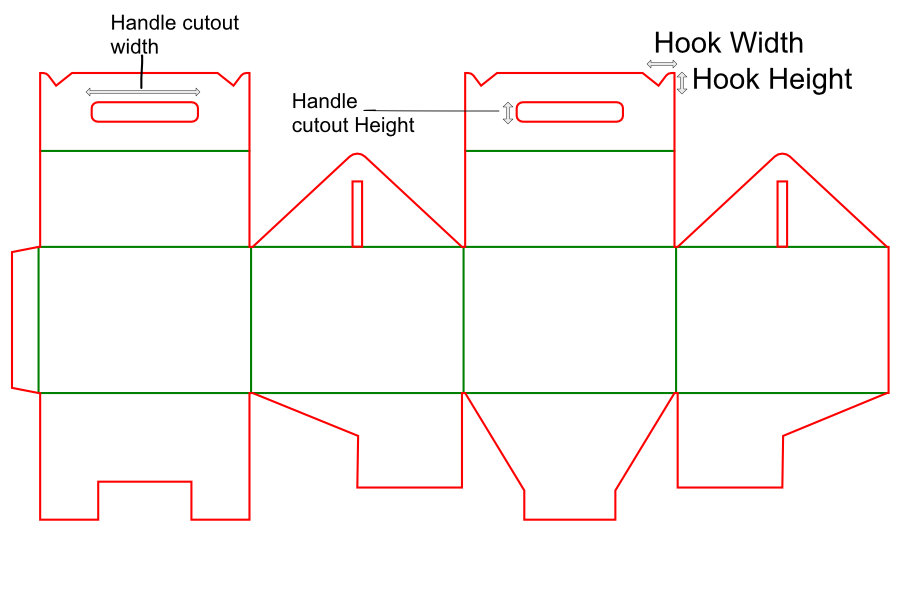
Walk past a popcorn stand, a wedding favour table, or a bakery counter and you will almost certainly see a gable box. That distinctive pointed roof with a flat carry handle is one of the most recognised packaging shapes in the world — and for good reason. It is easy to carry, easy to fill, resealable, and looks polished whether it is sitting on a retail shelf or handed across a market stall.
The FEFCO 0217 is the industry standard version of this shape. One glue seam on the side panel forms the tube body. Everything else — the base and the gable top — tucks and locks without any additional adhesive. Once you have glued that single seam, the box is ready to fold flat, store in bulk, and erect in seconds when you need it.
Most packaging formats lean heavily one way or the other. The gable box is genuinely at home in both worlds, which is why it shows up in such different contexts.
On the food side it is a natural fit for popcorn, fries, donuts, candy, macarons, and dry baked goods. The carry handle means customers can walk away from a counter without needing a bag. The resealable top means they can close it back up if they are not eating everything at once. For market stalls, food trucks, and event catering this box does a lot of work in a simple format.
On the gift side it is a staple for wedding favours, birthday party bags, baby shower gifts, Christmas hampers, and retail gift sets. Kraft board with a simple stamp gives it a handmade feel. White coated board with full colour print makes it look like a premium retail product. Unlike a Folding Box (FEFCO 0427) or a Lid Box with Base (FEFCO 0300) which need to be unwrapped or lifted open, the gable top opens and closes naturally, guests can peek inside, take something out, and tuck it back shut without the packaging falling apart.
This is the part most people skip past and then wonder why their box does not work properly. The FEFCO 0217 has a hook and lock mechanism at the gable top. Small hooks on the inner flaps fold inward and slot into corresponding lock holes to hold the top closed. The size of those hooks and holes is calculated from your material thickness setting in the generator. Get that number wrong and the hooks either will not reach the holes or will be too loose to hold.
For most applications E-flute at 1.5mm is the sweet spot. It is rigid enough to hold its shape, light enough to fold cleanly, and the hook and lock geometry works perfectly at that thickness. 400gsm display board is the other popular choice — it gives a cleaner print surface for gift applications and folds with a sharp crease.
If you are making a larger box for heavier items, B-flute at 3mm works well and gives significantly more structural strength. Just make sure you enter 3mm as your material thickness so the lock holes size up correctly for the thicker stock.
Thinner materials — standard 300gsm cardstock or lighter — can make the box feel flimsy. The walls flex under load and the gable top loses its crispness. For anything that needs to carry weight or stand up to handling, stay at 1.5mm minimum.
The base is straightforward. The side seam is just a glue join. But the gable top catches people out the first time, and it is worth understanding before you cut your first sheet.
The inner flaps at the top need to fold inward first — toward the inside of the box, not outward. Once both inner flaps are folded in, the hooks sit naturally in position. You then press the outer panels together and push the hooks through the lock holes. It takes a little pressure the first time, especially with stiffer board. Once it clicks in, it holds firmly and can be opened and closed multiple times without losing its grip.
The mistake most people make is trying to close the gable top without folding the inner flaps in first. The hooks end up on the wrong side and nothing lines up. Fold inward first, every time, and it clicks together cleanly.
For laser cut or plotter cut files, make sure your crease lines at the gable are cutting at the right depth — a crease that is too shallow on thick board makes the inward fold stiff and can cause the material to crack rather than fold.
Unlike most tuck-close boxes where repeated opening weakens the flap, the gable top hook and lock mechanism is built to be opened and closed multiple times. The hooks slot in and out without tearing the board as long as you are using a material at the right thickness.
This makes it practical for gift boxes where the recipient might want to reclose the box after taking something out, or for food applications where a customer closes the box between snacking. It is a small detail that separates a good packaging experience from one that falls apart after first use.
The gable format is purpose-built for loose or light-to-medium weight contents. It is not designed for heavy items — a box packed with glass jars or dense products will put strain on the box base. For heavy retail or shipping applications the Heavy Duty Box (FEFCO 0201) or the Heavy Duty Full Overlap Box (FEFCO 0203) are the right tools.
It is also not the right format if you need the contents completely hidden and fully sealed for shipping. The gable top is resealable but not tamper-evident. For products that need to ship securely through a courier network, look at the Self Locking Mailer Box (ECMA A10.20.03.01) instead.
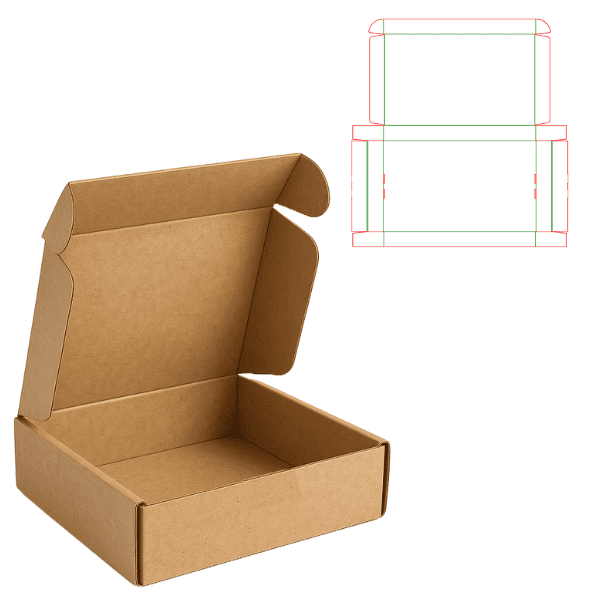
Glue-free folding box dieline based on FEFCO 0427. Download SVG, PDF or DXF. Generate high precision parametric dieline.
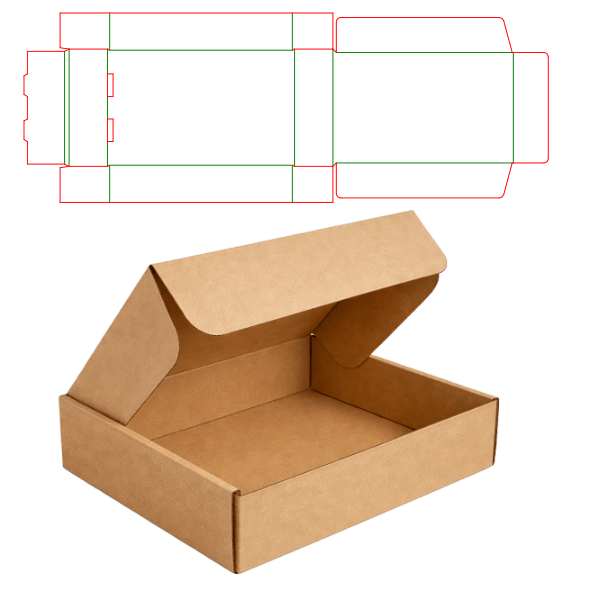
Pizza box style design with just locks on one side and do not require glue for locking. Based on FEFCO 0429 box standard
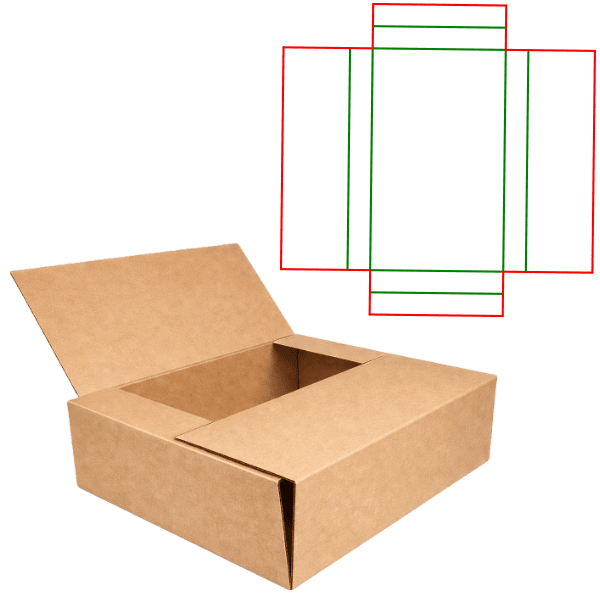
Best for packaging flat items that you want tight and good fit.
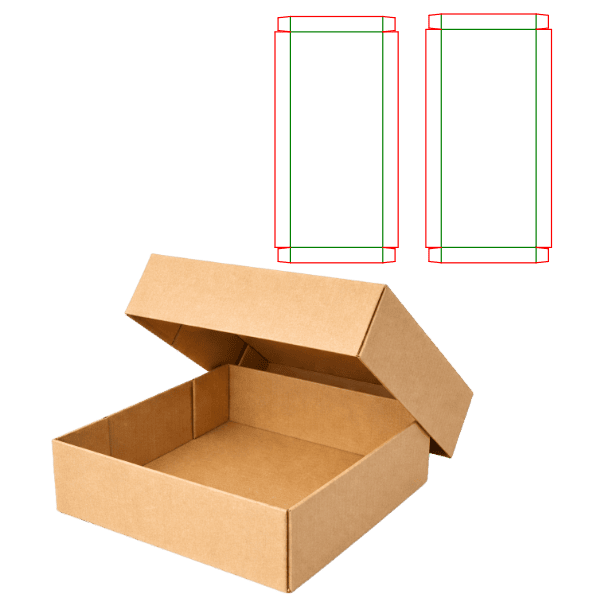
Box dieline with a separate lid and base.